New 10,000 Year Data Storage Will Never Forget

It's not a new concept. Keeping information around for thousands of years.
We have stone tablets that are thousands of years old.
We have cave drawings that are tens of thousands of years old.
But what about today?
Microsoft has stated they are officially out of the research phase. They have developed a prototype data storage that will last 10,000 years. They have built this storage device into glass.
They call this Project Silica.
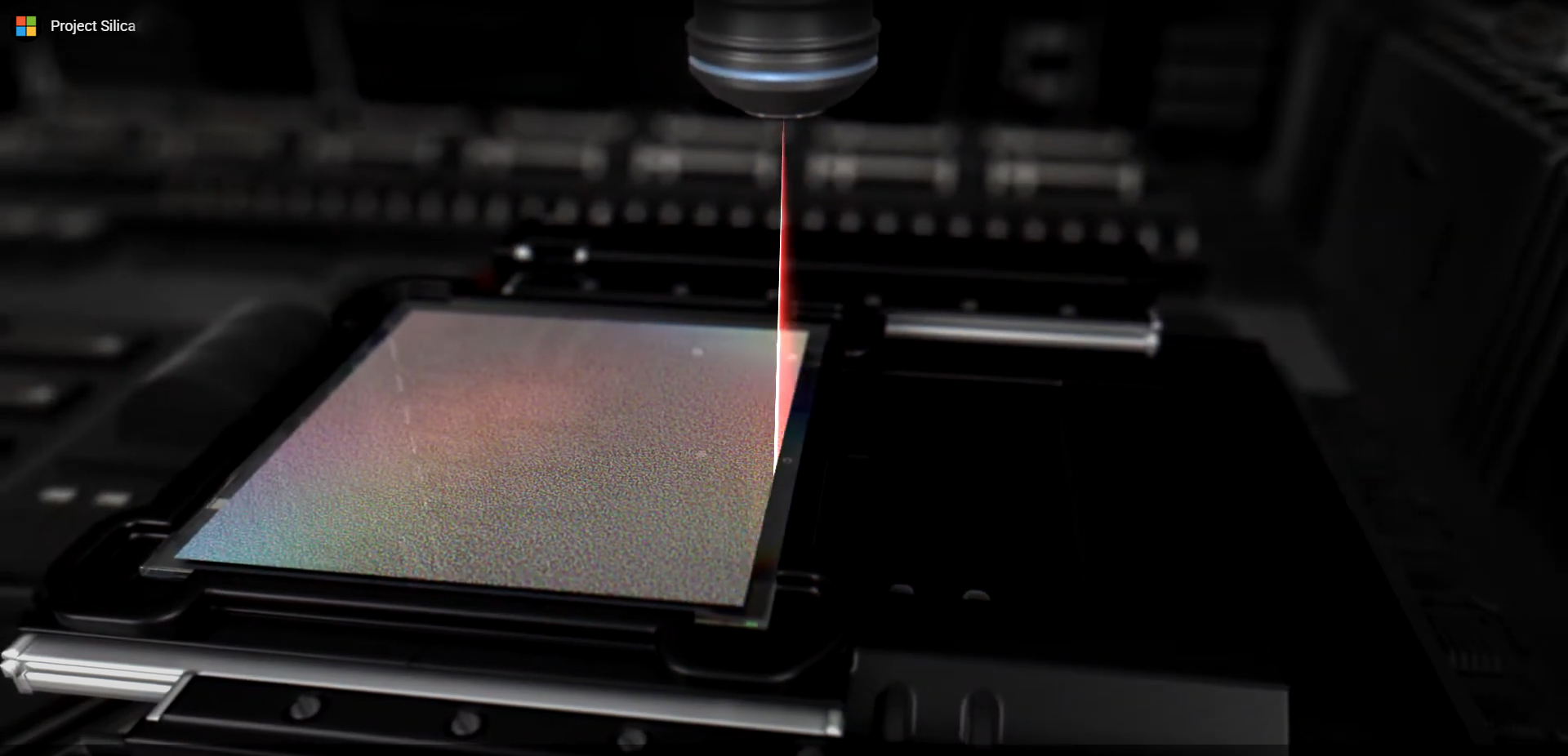
They have a working writer (laser), a working storage system (the glass), and a working reader (AI-powered microscope).
Unlike hard drives, which last less than 10 years, and tape, which lasts roughly 10 years. Storing data in glass can last 10,000 years or more.
A single glass plate, which is roughly the size of a drink coaster (75x75mm), can hold several terabytes of data. To put it in media terms, it can store 1,75 million songs or 3,500 movies.
The glass is virtually indestructible. It can withstand being boiled in water, heated to temperatures that would surely cook a chicken, microwaved, flooded, and scoured with steel wool. So don't let your next embarrassing mistake get caught on video.
Because the data is etched into quartz glass, it's immune to electromagnetic pulses (EMPs) or solar flares.
Data is encoded using a femtosecond laser (which fires pulses in quadrillionths of a second). It creates 3D nanoscale structures called voxels at varying depths within the glass.
One drawback (if you can call it that) is that the process is "Write Once, Read Many" (WORM). Once the laser etches into glass, the data cannot be changed or overwritten, making it perfect for long-term data backups.
So we'll never lose your favorite cat video.