The Offensive Playbook: The Simplest Way to Sell Microsoft 365 (and Almost Anything Else)
I’m going to share a sales approach with you that is so simple, so effective, and so underused in the Microsoft 365 space that it almost feels like cheating.
Before you roll your eyes at another "framework," understand that this strategy isn’t actually new. It’s been quietly used by service professionals around the world for decades. From mechanics to plumbers, they have all used it to sell you their services, you just didn’t realize it.
But for some reason that is genuinely baffling to me, almost nobody is using it to sell Microsoft 365 or cloud services.
Identify Your Prospect's Problem
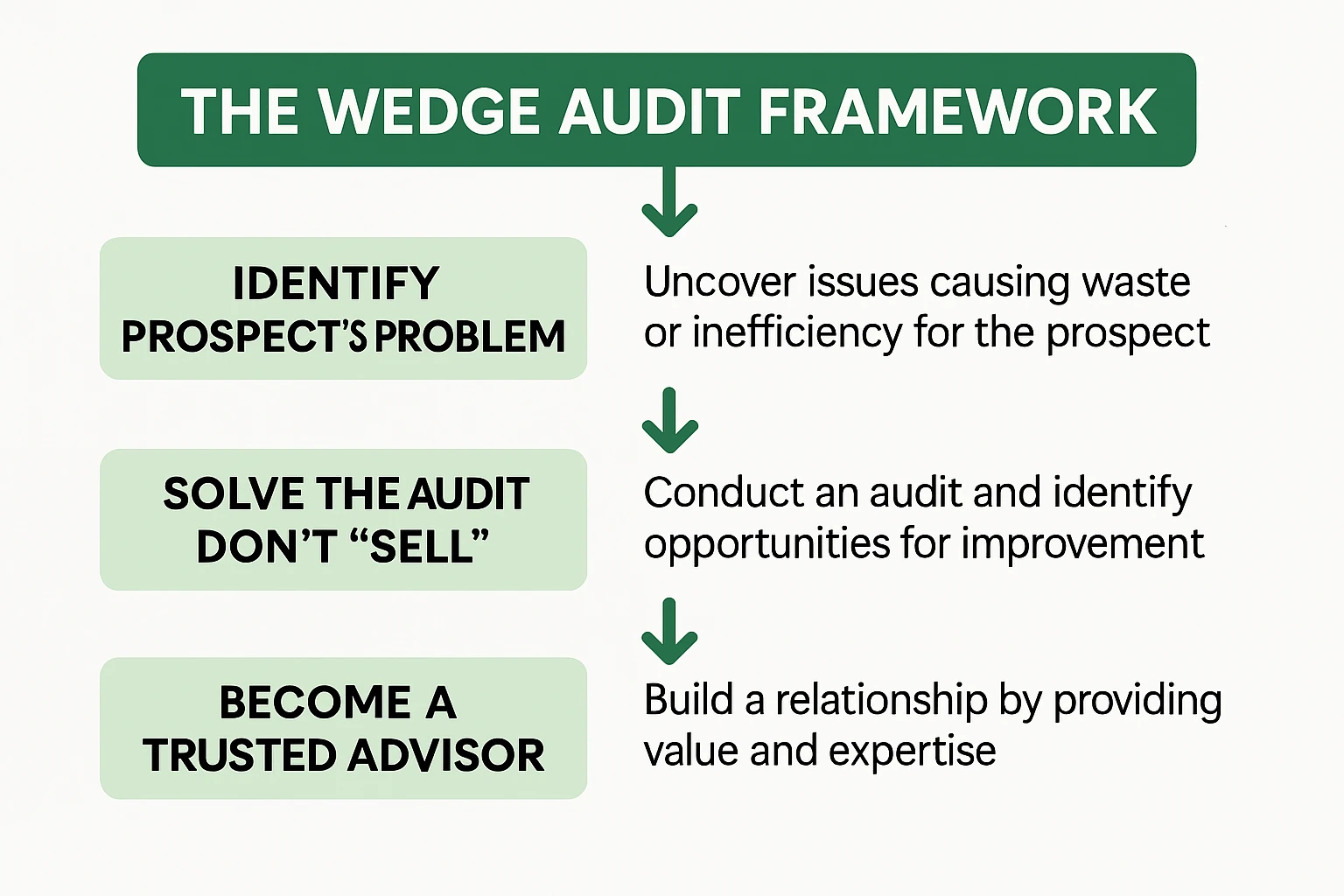
Unlike a mechanic or a plumber whom you call when you have a clear issue, your prospect has no idea a problem even exists.
Here is the reality of selling to an existing Microsoft 365 customer: They either already have a partner, or they are buying their licenses directly from Microsoft. On the surface, things are probably going well. They don't deal with many outages, they don't have to wait long for support, and as far as they know, they’re getting the best deal on their licenses.
And that’s the trap.
Most businesses relying on the cloud are hemorrhaging money every single month and have absolutely no idea. It’s not fraud or malice; it’s just the natural way cloud services work. People leave, roles change, departments restructure, and projects end.
Most of the time, IT is informed and updates the licenses but not every time. The licenses they miss just keep renewing, and the business just keeps getting billed.
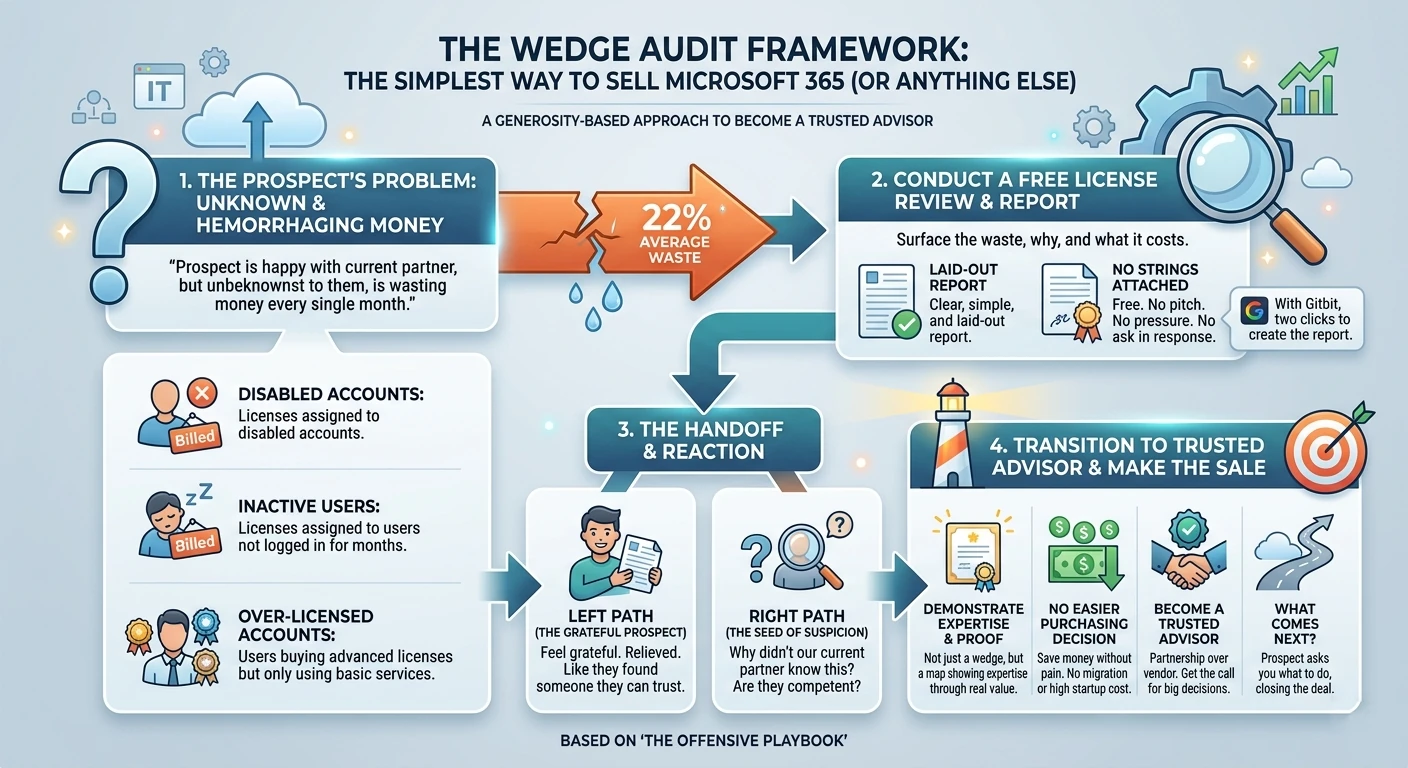
The Data: Gitbit has analyzed hundreds of Microsoft 365 clients, from ten-person "mom and pop" shops to huge corporations with thousands of users. On average, roughly 22% of Microsoft 365 licenses are going completely to waste.
That’s the crack in the foundation. That’s the weird sound coming from the car every time you start it. That’s the leaking toilet that needs fixing. They are spending 22% more than they need to, and that doesn’t even include over-licensed accounts.
All you have to do is solve that problem for them.
What the Problem Actually Looks Like
In practice, waste usually falls into three buckets:
- Licenses Assigned to Disabled Accounts: An employee leaves. IT deactivates the account but forgets to remove the license. Or, someone needs to access an old email, reassigns the license, and forgets to click "remove" when they’re done. Microsoft continues billing for it.
- Inactive Users: A user leaves the organization, but no one tells the admins. The account sits there—no logins, no emails sent, no files accessed—for months or even years. Microsoft continues billing.
- Over-Licensed Accounts: This is the most common and difficult to detect. Companies often buy the same high-tier license (like Business Premium) for every user, even though half the staff only needs Business Standard. Microsoft won't automatically downgrade you; they’ll happily bill you for the higher tier forever.
Across a 50-seat or 10,000-seat organization, this isn't just "rounding error" money. You’re talking about thousands or hundreds of thousands of dollars a year spent on nothing.
Solve the Problem, Don't "Sell"
Your job isn't to sell; your job is to fix the problem. No finger-pointing, no loud pitches—just point out the issue and explain the solution. Just as a plumber tells you to replace a pipe, you are going to give the solution away for free.
That is the Audit.
By conducting a simple license review, you surface exactly what’s being wasted, why, and what it’s costing them. You hand them that report clearly laid out, completely free, with no strings attached.
- No pitch.
- No pressure.
- No "ask" in response.
With Gitbit, the report is simple to create. We use minimal permissions, and with two clicks, you have everything you need to say: “Here’s what we found, and here’s what it’s costing you.”
Why Free? Because That’s How You Win.
Giving away the "cookie jar" makes people nervous. “Couldn’t they just remove the licenses themselves and save the money?”
The answer is simple: You aren't a vendor; you’re becoming a Trusted Advisor.
- Vendors take money and deliver a product. They get replaced the moment someone offers a lower price.
- Trusted Advisors make the business better. They get the call when the big decisions are being made.
Great relationships are built on generosity. Nothing demonstrates your competence and integrity faster than handing someone actionable savings before they’ve paid you a single dollar.
Think about the prospect’s perspective: In a world where margins are thinning, you just handed them a life raft. You’ve also planted a seed of suspicion regarding their current provider:
- "Why didn't our current partner know this?"
- "Did they know and just not tell us?"
- "Are they actually competent?"
Expertise Through Proof
You don't need testimonials when you have real-time results. You aren't saying, "Imagine what I can do for you." You are saying: "You’re currently paying $10,000/month. Here is exactly how to pay $8,000/month."
The audit isn’t just a wedge; it’s a map. You’re showing the prospect exactly how much they are being underserved by their current vendor.
There is no easier purchasing decision than saving money without pain. No migration, no loss in service, and no high startup cost. When you show them the path to savings, they stop asking you to "prove your value" and start asking, “What comes next?”
Now that you know how to grow your business, jump over to the Defensive Playbook and learn how to stop customer churn.
More Guides
- The Defensive Playbook
- Gitbit's Super Simple Pricing Model
- How To Purchase Gitbit Licenses
- How To Cancel Gitbit Licenses
- Convincing Prospects To Let You Run A Report
- How To Log In To Gitbit
- How To Run A Gitbit Audit Report
- How To Gain Insights Using The Gitbit Audit Report
- How To Handle Objections
- Managing Your Team In Gitbit
- How To Contact Gitbit Support